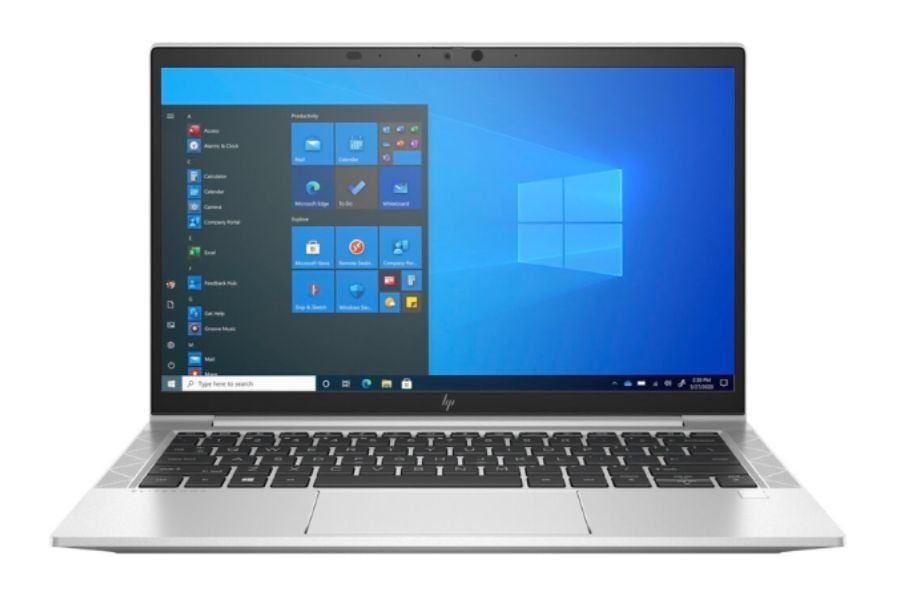
For $390, This Refurbished EliteBook 830 G8 Delivers Wolf Security and a Touchscreen
We examine the Grade A 13.3-inch laptop's chassis, HP's firmware-to-files security stack, 32GB RAM with Iris Xe graphics, and hybrid-work touchscreen, all priced at $389.99 against a $549.99 MSRP.
Source material: techrepublic.com
The Deal, by the Numbers
StackSocial is listing a near-mint HP EliteBook 830 G8 for $389.99, which is below the $549.99 MSRP. The price lands it in consumer ultrabook territory, but the specification sheet reads like a business fleet standard: an 11th Gen Intel Core i7, 32GB of DDR4 memory, and a 256GB PCIe NVMe SSD. The Grade A rating means the aluminum chassis carries minimal to no cosmetic wear. For a machine that originally targeted corporate procurement departments, the discount reflects the refurbished status rather than any compromise in components. The Core i7 alone, paired with 32GB of RAM, typically commands a higher premium in new models. This is the kind of pricing that makes a refurbished business laptop a rational alternative to a newly boxed consumer notebook with half the memory and a plastic shell.
Why the Chassis Matters Differently
Consumer laptops chase thinness with flimsy materials, but the EliteBook 830 G8 uses CNC-machined aluminum and weighs 2.8 pounds. That weight is a result of structural reinforcement, not a lack of metal. The port selection also tells the story: Thunderbolt 4, HDMI 2.0, USB-A, Wi-Fi 6, and Bluetooth are all on board, so there's no need to carry a dongle for a projector, a wired keyboard, or an external display. Many IT departments chose this exact model for employees because it keeps working through years of daily lid opens, docked sessions, and commutes. The external connectors match what you'd find on a new workstation, not a typical consumer machine at this price.
HP Wolf Security: The Firmware-to-Files Protection Stack
HP Wolf Security is not a single antivirus program but a collection of hardware-backed defenses. It includes HP Sure Start, which scans the BIOS at boot and rolls back corrupted firmware automatically; HP Sure Sense, which uses deep learning to flag never-before-seen malware; and HP Sure Click, which isolates suspicious browser tabs in a virtualized container. All of these sit on top of TPM 2.0 hardware encryption, meaning that even if a drive is removed, the data remains tied to the original chip. This is a security posture that consumer laptops typically lack entirely. The firmware-level protection is particularly relevant for remote workers who plug into unverified networks. While no system is immune to a determined attacker, the combination of Sure Start's boot-time self-healing and Sure Click's runtime isolation addresses two of the most common attack vectors: rootkit persistence and drive-by downloads. The components are managed through HP's centralized console, which is why the laptop qualifies for enterprise deployment out of the box.
32GB RAM and Iris Xe Graphics for Daily Grinds
The 32GB of DDR4 memory is the standout specification for multitaskers. Running a spreadsheet, a video meeting, a development IDE, and a stack of browser tabs simultaneously leaves plenty of headroom. Intel Iris Xe Graphics, the 11th Gen processor's integrated GPU, handles two external displays in addition to the internal screen, so a multi-monitor setup doesn't require a discrete graphics card. The 256GB PCIe NVMe SSD delivers read speeds fast enough to load large project files without perceptible lag. Windows 11 Pro comes preinstalled, which adds features like BitLocker encryption and Remote Desktop over the Home edition. This configuration is aimed at a specific workload: someone who toggles between heavy applications throughout the day, not just a single video stream. The 32GB capacity is the kind of memory you'd usually find in a significantly more expensive laptop, and its presence here at $389.99 makes the storage size the one compromise—256GB is fine for documents but will fill up if you keep a large media library local.
The Touchscreen and the Hybrid Work Profile
The 13.3-inch Full HD touchscreen sits in a chassis that HP designed for commuters and hybrid meetings. The touch layer is functional, not a gimmick—it lets you swipe through documents on a train or tap to dismiss a calendar notification during a stand-up. The 2.8-pound weight means it slides into a messenger bag without bending the shoulder strap. Professionals, developers, remote workers, and students all fit the profile, but the specific combination of enterprise security and 32GB RAM leans toward someone who runs a small business or a home office without an IT department. The security stack replaces the need to configure third-party endpoint protection; the RAM handles virtual machines or local database queries. For a student writing a thesis, the touchscreen is a nice convenience, but the real value is the warranty-grade hardware that shrugs off a spilled coffee or a drop from a desk. The Grade A rating ensures the screen has no dead pixels, a common failure point on used laptops.
Where this came from. This breakdown is based on source material published at techrepublic.com. Images above are used with the credits shown beneath each one.