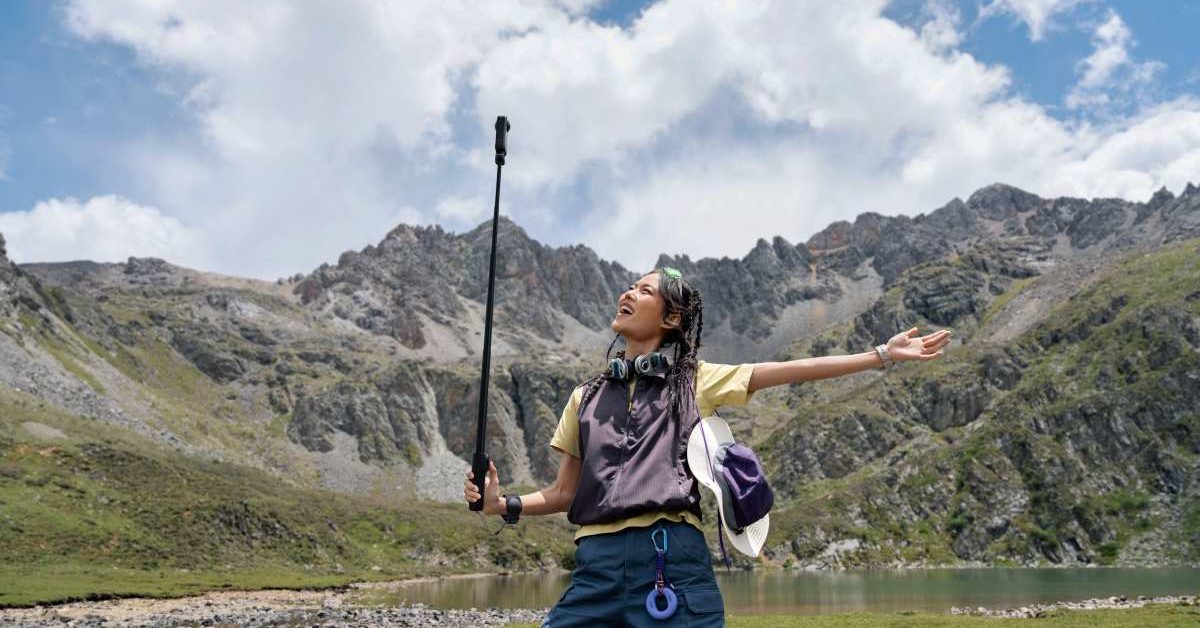
8 upgrades that make the Insta360 X6 a travel camera without the usual tradeoffs
The X6's $700 body packs an 8K 360 cam, a 5K action cam, and AI tracking, but its real edge comes from a 51% battery jump, 66-foot waterproofing, and 47GB of built-in storage that remove the last excuses for a dedicated camera.
Source material: dronedj.com
One camera replaces three separate devices
- Price: $700
- Video: 8K/50, 5K/60, 4K/120
- AI: tracking mode
The X6 is built around a simple proposition: leave the separate action cam, gimbal, and 360 camera at home. It shoots immersive 8K 360 footage at up to 50fps, lets you reframe later instead of aiming precisely, and switches to a conventional 5K/60 action mode for non-360 clips. A dedicated tracking mode keeps people, pets, or moving objects centered, mimicking what would normally need a motorized gimbal. Insta360 prices the X6 at $700, with launch promotions adding cloud storage and AI editing benefits for early buyers. For motorcyclists, cyclists, and vloggers, that means one battery, one lens system, and one storage card to manage—a simplification that cuts down on packing decisions and mid-trip camera swaps, though it also puts all your eggs in a single device.
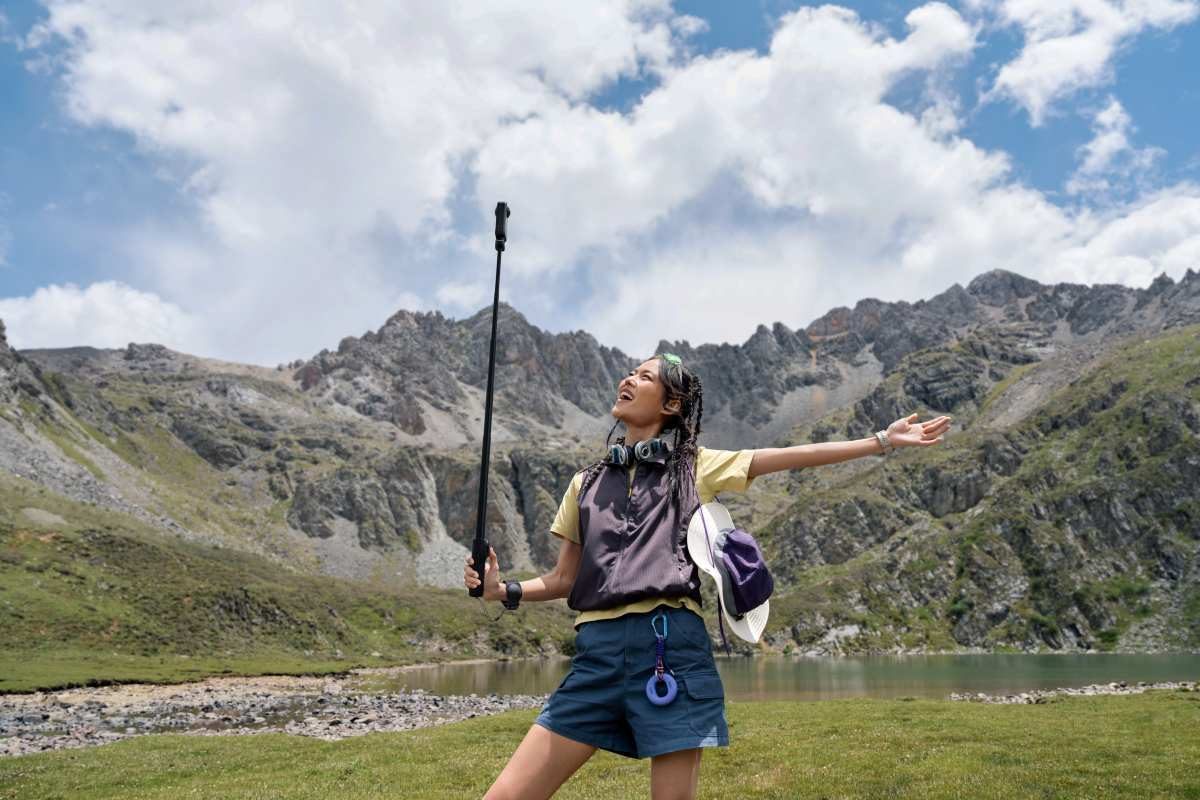
Low-light performance gets a serious hardware boost
- Hardware: dual Sony sensors, 33%
- Video: low-light noise reduction
Night scenes, backlit environments, and high-contrast landscapes have always been a weak spot for immersive cameras, and the X6's dual Sony sensors attack that directly with roughly 33% more sensor area than the previous X5. A larger sensor area captures more light per frame, which gives the new triple AI processor a cleaner starting image. That processor contributes significantly more computing power while using less energy, so the camera can run AI-driven noise reduction and adaptive exposure in real time without draining the battery. In practice, that means city lights at night, shade under tree cover, and sunsets with strong contrasts keep more visible detail instead of falling into muddy shadows or blown-out highlights. The result is footage that's more usable after sunset, and you don't need to spend time in an editor compensating for sensor limitations. Adaptive exposure adjusts to the scene as you shoot, and noise reduction cleans up grain. For travelers who want golden hour and night street scenes without grading every clip, the X6 makes low light a less stressful part of the workflow.
Native Dolby Vision cuts down editing time
- Video: Dolby Vision, 10-bit colo
The X6 is the first X-series camera to record Dolby Vision directly inside the body. Combined with 10-bit color, this stores a wider dynamic range and many more gradations than standard 8-bit capture, so bright and dark areas of a scene are kept instead of clipped. For a creator who wants to post quickly, the practical effect is that beach skies, trail sunsets, and city neon don't require manual highlight/shadow work in an editor. Dolby Vision is applied in-camera, meaning the file already carries the HDR information when you open it. You can output straight to social media or a video player that supports HDR without a separate grading pass. The larger color depth reduces banding in smooth gradients—like a sky transitioning from pale yellow to deep orange—and the expanded dynamic range preserves texture in both white sand and dark forest floor. So the path from capture to sharing is shorter: set the camera, record, transfer, post. For those who do edit, the footage is more forgiving when you push exposure, but the main point is that you often won't need to.
Battery life jumps 51%, with fast charging to match
- Battery: 2600mAh, 140 min, 51% l
The X6 ships with a 2600mAh Xtreme Battery, and that capacity translates directly to recording time: up to 140 minutes of continuous 8K/30fps capture. That's about 51% longer than the X5, which matters when you're on a full day of trail riding or hiking with no outlet in sight. The improvements aren't just capacity; fast charging brings the cell from zero to 80% in 24 minutes. So a quick break—lunch at a trailhead or a charge at a café—can add a substantial chunk of additional runtime, enough for another long segment of shooting. Cold conditions don't gut the battery either. It's rated to operate at -4°F (-20°C), so winter sports or high-altitude shoots don't require swapping batteries every few minutes. Taken together, the longer runtime and rapid top-ups reduce the need to carry multiple spares. One full charge covers a typical outing, and a short stop restores most of it, letting you leave the extra cells behind and lighten your pack.
Waterproof to 66 feet, with a dive case for deeper
- Durability: 20m waterproof, 60m
- Durability: scratch-resistant re
The X6 is waterproof to 66 feet (20 meters) without an external housing, so it can go straight from a coastal beach to a snorkel session without adding a bulky case. For deeper dives, the Invisible Dive Case Pro extends that rating to 197 feet (60 meters), covering a wide range of underwater shooting. The camera's replaceable lenses have also been redesigned this generation, with significantly better scratch resistance and lower replacement costs if you do damage one. That durability is practical: a camera used on rocks, sand, and concrete is likely to take a few hits, and the design makes lens repair less expensive than it used to be. For a typical traveler, this means you don't need to buy a separate waterproof shell for casual boat trips or rainy hikes; the body handles it. Those who dive beyond 66 feet have a dedicated case available, but the default waterproofing removes a common accessory expense and keeps one more thing out of your bag. It's the kind of baseline protection that makes the X6 feel less delicate than earlier X-series models.
47GB of built-in storage saves you from a forgotten card
- Storage: 47GB built-in
The X6 includes 47GB of built-in memory, so it's ready to record the moment you take it out of the box, even if no microSD card is packed. That's a practical buffer for travel: you can arrive at a scenic overlook, pull out the camera, and capture the view without first checking whether you remembered the card. For casual use—a sunset walk, a city circuit, a handful of family clips—the internal storage can carry a decent amount of footage before you need to offload it. For longer shoots, you'll still want a microSD card to maximize capacity, but the built-in amount covers many common scenarios. It also means you can start recording while your card is locked away in a laptop bag; you don't have to stop and search. Insta360 designed this to eliminate the 'forgot my card' panic that usually ends a shoot before it begins. For last-minute packers, 47GB is a dependable fallback that keeps the camera usable in the field.
Accessories ecosystem spans 100+ options, with backward compatibility
- Compatibility: 100+ accessories,
The X6 isn't an island. There are more than 100 compatible accessories in the ecosystem, covering motorcycle riding, cycling, underwater filming, and automotive work, so you can rig the camera for a helmet, handlebar, chest strap, or car mount. For existing X5 and Ace-series owners, many mounting accessories remain compatible, which means upgrading doesn't force a full accessory re-purchase. That's a significant cost saving: a helmet mount or selfie stick you already own carries over. For new buyers, the wide accessory range gives proven options rather than waiting for third-party gear to catch up. The ecosystem integration also reduces what you need to carry—because the same mounts work across multiple camera generations, you can travel with one mounting kit and swap cameras without changing your setup. Whether you're shooting a motorcycle route, a mountain bike descent, or an underwater excursion, there's likely an accessory designed for it. That breadth lowers the barrier to entry and makes the X6 a more flexible option than a camera with a tiny accessory lineup.
Competition remains, but the X6 takes a different route
- Price: X5 discounts
- Compatibility: GoPro mounts, DJI
At around $700, the X6 enters a market with several strong options. The previous-generation X5 is now seeing discounts and remains attractive for casual users who don't need the bigger sensors, Dolby Vision, or AI editing—it's a cheaper way to get similar core shooting. GoPro's MAX still appeals to people already committed to GoPro's mount ecosystem, but that hardware is aging and falls behind newer rivals in both resolution and processing power. DJI's Osmo Action 6 takes another route entirely: it's a traditional action camera, not an immersive one, and it wins with excellent stabilization, strong low-light performance, long battery life, and a mature accessory ecosystem. The X6's strategy is different: combine an 8K immersive camera, an action camera, and an AI tracker in one pocket-sized body, so you don't have to choose. You gain versatility and the convenience of carrying less gear, but you also accept that a focused competitor might edge it out in a single specialty. For a traveler who wants to pack once and shoot a variety of footage, that tradeoff is often worth it; for a dedicated action-sports creator with a GoPro or DJI kit, sticking with their system may still make sense.
Where this came from. This breakdown is based on source material published at dronedj.com. Images above are used with the credits shown beneath each one.