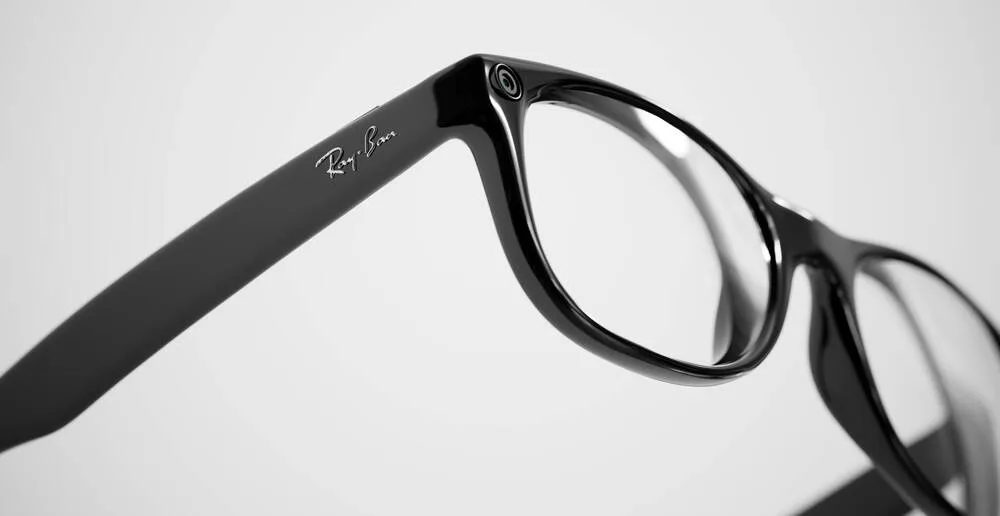
8 Smart Glasses Features That Put Information Where Your Eyes Already Look
Turn-by-turn arrows, live translation captions, and surgical vitals—smart glasses are overlaying utility onto the world you already see.
Meta's virtual reality division keeps bleeding billions even after Horizon Worlds was mothballed — here's where the money goes and what comes next.
Source material: ghacks.net
Meta's Reality Labs division has accumulated approximately $88 billion in losses since the end of 2020, based on the company's Q2 2026 earnings report. The second quarter alone added $4.6 billion to that total, following a $4 billion loss in Q1. The cumulative figure has climbed steadily from $80 billion in January, when Reality Labs reported a $6 billion loss. Revenue from the division remains modest, at $402 million in Q1 and $431 million in Q2, offering little against the billions spent. By contrast, Meta's overall Q2 profit reached $15.8 billion, a 13% drop year over year. This means the VR unit's losses are eating into an otherwise profitable company, though the losses have narrowed since the start of the year. The trajectory suggests that while the bleeding has slowed, it hasn't stopped, and the division's spending continues to outpace its sales by a wide margin.
Meta's leadership, led by Mark Zuckerberg, has consistently justified the enormous spending on Reality Labs by projecting the metaverse could be worth trillions by 2030. That conviction persists even as quarterly losses continue to mount. A 2023 report commissioned by Meta estimated that virtual reality headsets used for work and recreation could contribute $760 billion to US GDP by 2035, providing an economic rationale for the heavy investment. Reality Labs' budget covers not just VR headsets but also smart glasses and augmented reality research, which Meta views as foundational for a next-generation computing platform. The company has not publicly indicated any timeline for breaking even, and the Q2 earnings call focused more on AI opportunities, with CFO Susan Li pointing to AI-powered algorithms boosting social media adoption. This suggests Meta sees AI as a nearer-term growth engine, while the metaverse bet remains a longer-term gamble. For now, the company is willing to absorb billions in losses to stay positioned for that potential payoff.
Horizon Worlds, Meta's primary virtual reality social platform, has been placed into maintenance mode as part of a broader retrenchment within Reality Labs. The company eliminated hundreds of positions from the division earlier in 2026, and the VR app now receives only critical fixes and server upkeep, with no new features or major updates. This essentially freezes the product for existing users, who will still find the basic experience intact but will see no evolution in environments, tools, or social mechanics. Meta has not provided any roadmap for Horizon Worlds beyond this minimal state, leaving its future unclear. The move effectively ends the company's flagship consumer metaverse effort, even though Meta has maintained that it remains involved in shared virtual reality in some form. The exact number of job cuts was not disclosed, but the shift reflects a significant scaling back of ambitions for the platform that was once central to Zuckerberg's vision.
Meta has clearly shifted its emphasis to generative AI and smart glasses, but it hasn't fully exited VR. The Q2 2026 earnings call led with AI initiatives: Zuckerberg highlighted the launch of Muse, a set of image and video generation tools, and plans to monetize AI through subscriptions. CFO Susan Li said Meta's AI-powered algorithms are increasing social media adoption. Meanwhile, Reality Labs losses are now reported alongside AI priorities, a sign that the division's identity is changing. The job cuts and Horizon Worlds' maintenance mode suggest VR hardware is no longer the centerpiece. Yet Meta still sells headsets and continues to develop smart glasses, which are reportedly getting the Muse AI by default. So it's a pivot, not a clean break.
Meta's smart glasses are now its main hardware focus, and the newly released Meta Glasses are the first to feature Muse AI by default. Muse generates images and video from text prompts, and Meta plans to monetize it through subscription tiers, though pricing hasn't been announced. Zuckerberg expressed optimism about the glasses' potential during the Q2 earnings call, calling them a key part of Meta's AI strategy. The glasses build on the company's earlier Ray-Ban partnership, but now the AI features are baked in. Meta hasn't separated smart glasses revenue from the rest of Reality Labs, so it's unclear how much of the $431 million in Q2 revenue comes from glasses versus VR headsets. Privacy concerns remain a hurdle, but Meta is pushing ahead.
Camera-equipped smart glasses have become a flashpoint for privacy concerns, with implications that reach beyond Meta itself. The ability to record people discreetly without their knowledge has prompted bans in some venues and sparked public backlash, creating resistance to the entire product category. Meta's glasses, which include an integrated camera, are squarely in the middle of this controversy. The company has not introduced features beyond a small indicator light to signal recording, which critics argue is insufficient for meaningful consent. This unease has had industry-wide effects: reports indicate that Apple delayed its own smart glasses development specifically to ensure user safety first. Meta's latest glasses are the first to integrate Muse AI by default, making the camera more capable and intensifying the question of how recorded data is handled. The Q2 earnings report from Meta did not address these privacy issues directly, though the market impact remains a persistent obstacle for adoption.
Meta has offered no public timeline for when Reality Labs will reduce its losses or turn a profit. The division has been consistently unprofitable since at least 2020, and the company's earnings reports do not break down spending between smart glasses hardware and virtual reality, making it difficult to see which segment drives the deficit. Revenue for the division is minuscule compared with its costs, so any path to profitability would require either a major sales surge or a dramatic cut in investment. While the quarterly losses have narrowed since the start of 2026, they remain substantial. Meta's leadership has shifted its messaging toward AI and smart glasses as growth areas, suggesting that achieving profitability in virtual reality is not a near-term priority. The company has also not indicated whether it will continue funding Reality Labs at its current level or change the structure of the reporting division. Without clearer financial segmentation, investors and analysts are left to guess what the future holds for the unit.
Meta reports Reality Labs' results as a single figure, so it's impossible to say exactly how much of the $4.6 billion Q2 loss stems from smart glasses hardware versus virtual reality. The company hasn't broken out costs or revenue by product line. That's a significant gap for investors trying to gauge whether the smart glasses bet is gaining traction. The shift in narrative — from metaverse to AI and glasses — suggests a reallocation of resources, but the financials don't reveal the split. Analysts can only infer from product launches like the Meta Glasses with Muse AI. Until Meta provides more granular reporting, the division's spending breakdown remains opaque. Future earnings calls may offer additional detail, but none has been announced yet.
Where this came from. This breakdown is based on source material published at ghacks.net. Images above are used with the credits shown beneath each one.
Turn-by-turn arrows, live translation captions, and surgical vitals—smart glasses are overlaying utility onto the world you already see.
The Klarna-backed Upgrade and iOS 26.6 ship, while we explore upcoming smart glasses, iOS 27 refinements, Ed Zitron's 'watch everything burn' prediction, and questions about Apple Card installments.
Mozilla's Ajit Varma on user control, concentration risk, and why the open web needs an independent engine.